How to Build an HR Tech Stack in 2026: Tools & Examples
Build a smarter HR tech stack with the right HR tools and HR software. Learn what to include, how to structure it, and see examples to support your team.

HR managers are expected to move quickly while keeping processes organized, compliant, and consistent. But when employee data lives in multiple systems and repetitive tasks pile up, even simple workflows can become difficult to manage.
A well-structured HR tech stack helps bring order to that complexity. Instead of relying on disconnected tools, you create a system that supports hiring, onboarding, communication, and development without unnecessary friction.
In this guide, you’ll learn what an HR tech stack is, why it matters, what tools to include, and how to build one that supports your team as it grows.
What is an HR Tech Stack?
An HR tech stack is the collection of HR tools and software a company uses to manage the employee lifecycle, store data, automate workflows, and support people operations. A well-designed stack connects these systems so information flows smoothly across HR processes.
Rather than solving problems one tool at a time, a stack focuses on how each system works together. This reduces manual work, improves visibility, and helps HR teams operate more consistently.
Why Building the Right HR Tech Stack Matters
The structure of your HR tech stack directly shapes how your team operates. When systems are aligned, daily work becomes easier to manage and far more predictable.
Here are a few benefits that make it worth it to build an effective HR stack:
Administrative efficiency
Disconnected tools often force HR teams to enter the same information multiple times. A connected stack reduces that repetition, freeing up time for higher-value work while lowering the risk of human error.
Better hiring workflows
Hiring tends to slow down when communication, candidate data, and approvals live in separate systems. A thoughtful stack brings those steps together so teams can move candidates forward with fewer delays and automate workflows.
Improved employee experience
Employees notice when processes are smooth. Reliable onboarding, clear communication, and structured feedback all contribute to a more consistent experience from day one.
Stronger data accuracy
When employee data flows through a central system, reporting becomes more trustworthy. Leaders can make decisions based on clean information instead of piecing together insights from multiple sources.
Scalability
Growth exposes operational gaps quickly. Building the right stack early helps your team expand without constantly replacing tools or redesigning workflows.
HR Tech Stack Example (What Tools to Include)
Most HR teams do not need every category immediately. The goal is to prioritize tools that solve your biggest operational challenges first.
Here are a few different types of tools that you should include in your HR tech stack:
HRIS - Serves as the system of record for employee data, reporting, and compliance.
Recruiting software - Helps manage job postings, candidate pipelines, and hiring workflows.
Payroll and benefits tools - Ensures employees are paid accurately while supporting benefits administration.
Employee communication tools - Centralizes internal messaging, documentation, and business communication.
Workflow automation tools - HR automation tools reduce repetitive administrative work and improves consistency.
Performance management tools - Supports reviews, feedback, and employee development.
Learning and development platforms - Helps teams train, upskill, and retain employees.
Start with the systems that directly impact daily operations, then expand your stack as your processes mature.
How to Build an HR Tech Stack (Step-by-Step)
Building a stack is not about chasing trends. It starts with understanding how your team actually works.
Here are a few steps you can follow to build an effective HR tech stack:
Identify your biggest HR bottlenecks.
Audit the tools you already use.
Prioritize integrations to prevent data silos.
Choose software that can scale with your company.
Eliminate overlapping tools.
Focus on adoption so your team actually uses the stack.
Note: a practical rollout matters just as much as tool selection. Look for software with strong integration capabilities so employee data stays aligned across systems. Just as important is adoption.
Assign ownership, train managers, and review usage regularly to ensure your stack delivers real value.
10 Best HR Tech Tools & Software for 2026
Choosing HR software often comes down to how well it supports your workflows and integrates with the rest of your stack.
Here's our list of the 10 best HR tech tools & software:
| Tool | What It Does | HR Stack Fit Score |
|---|---|---|
| Text Blaze | Automates repetitive typing, documentation, and communication workflows | 9.5/10 |
| BambooHR | Centralizes employee data and supports core HR processes | 9/10 |
| Deel | Manages global hiring, payroll, and compliance | 9/10 |
| HiBob | Supports engagement, performance, and modern workforce management | 8.8/10 |
| Lattice | Structures performance reviews, feedback, and employee development | 8.7/10 |
| Workable | Streamlines recruiting, candidate tracking, and hiring workflows | 8.6/10 |
| Rippling | Combines HR, payroll, and IT into a unified platform | 9.2/10 |
| Workstatus | Provides workforce tracking and productivity insights | 8.3/10 |
| Eightfold AI | Uses talent intelligence to improve hiring and workforce planning | 8.9/10 |
| PeopleForce | Centralizes HR workflows, performance, and employee management | 8.5/10 |
1. Text Blaze

Text Blaze is the ultimate team productivity & communications tool that helps HR managers & teams keep communication on the same page and automate workflows.
Text Blaze allows you to create smart text templates and insert them anywhere you work to automatically fill out forms, transfer data, automate repetitive typing, and much more.
How Text Blaze helps HR managers:
Automate repetitive typing anywhere you work! Text Blaze works on Chrome, Windows, and Mac.
Streamline HR workflows & processes like transferring data, filling out forms, sending an email, or any other repetitive workflow.
Get the correct response in every interaction. Text Blaze helps you get the right message every time.
Reduce mistakes with templates that help agents stay consistent and on-brand.
Save time for free! Text Blaze is free forever, no licenses or upgrades necessary.
Want to save hours by automating repetitive typing & workflows?
Join over 700,000+ others who are automating workflows with Text Blaze.
2. BambooHR
Bamboo HR is an HRIS designed to centralize employee data and streamline core HR processes. It provides a single location for managing records, time-off requests, onboarding workflows, and reporting.
The platform focuses on usability, making it approachable for growing teams that want structure without unnecessary complexity. Organizations use it as the foundation of their HR tech stack because it improves visibility while reducing administrative friction.
How BambooHR helps HR managers:
- Centralizes employee information for easier access and reporting
- Simplifies onboarding with structured workflows
- Tracks time off and employee records in one system
- Improves data accuracy by reducing duplicate entry
- Provides reporting tools to support better decision-making
- Helps standardize HR processes as teams grow
3. Deel
Deel is a global HR platform that helps companies hire, pay, and manage employees and contractors across multiple countries. It handles localized compliance requirements, contracts, and payroll, allowing HR teams to expand internationally with less operational risk.
The platform reduces the complexity typically associated with global employment. This makes it particularly valuable for organizations building distributed teams.
How Deel helps HR managers:
- Simplifies international hiring and compliance
- Automates global payroll processes
- Manages contracts across jurisdictions
- Reduces legal risk when expanding into new regions
- Consolidates employee and contractor management
- Supports smoother global onboarding
4. HiBob
HiBob is an HR platform built to support modern people operations with tools for engagement, performance, and workforce management. It gives HR teams better visibility into employee data while helping managers stay connected to their teams.
The platform is configurable, allowing organizations to tailor workflows to match their structure. Many fast-growing companies adopt it to bring consistency to evolving processes.
How HiBob helps HR managers:
- Centralizes workforce data for clearer visibility
- Supports engagement initiatives and employee feedback
- Enables customizable HR workflows
- Helps managers track performance and development
- Strengthens communication across teams
- Provides insights that support strategic planning
5. Lattice

Lattice is a performance management platform that helps organizations run structured reviews, gather feedback, and align employees around goals. It encourages continuous development through regular check-ins and measurable objectives.
By creating a clear framework for performance conversations, the platform supports both employee growth and organizational alignment. Many HR teams implement it to strengthen retention and career progression.
How Lattice helps HR managers:
- Structures performance reviews for consistency
- Facilitates continuous feedback between managers and employees
- Aligns goals across teams and departments
- Tracks employee development over time
- Supports data-driven talent decisions
- Helps improve retention through growth visibility
6. Workable
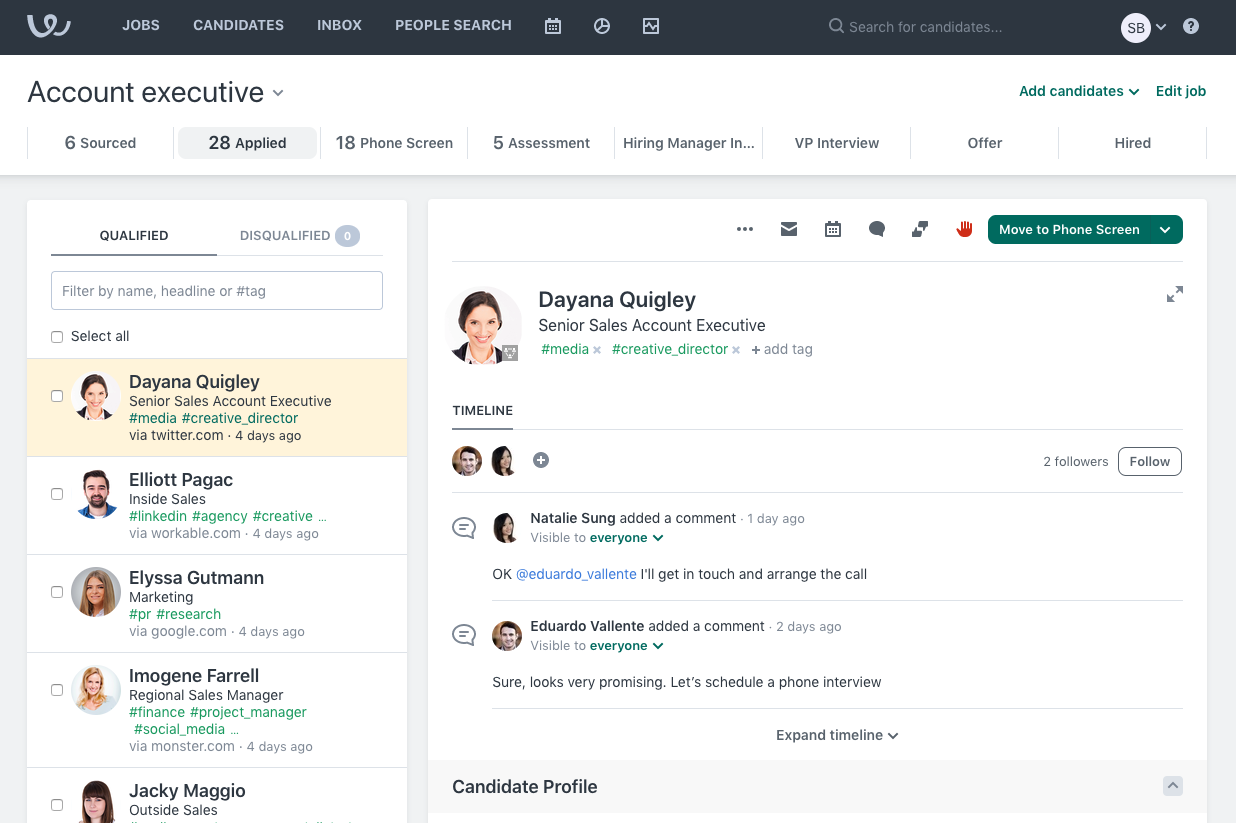
Workable is recruiting software designed to help HR teams manage the entire hiring process from a single platform. It supports job posting, candidate sourcing, interview scheduling, and hiring collaboration.
The system brings structure to recruiting workflows, making it easier to evaluate candidates efficiently. Organizations experiencing hiring growth often use it to maintain organization throughout the process.
How Workable helps HR managers:
- Organizes candidate pipelines for better visibility
- Simplifies job distribution across multiple boards
- Supports collaborative hiring decisions
- Streamlines interview scheduling
- Improves candidate tracking
- Helps teams hire more efficiently
7. Rippling
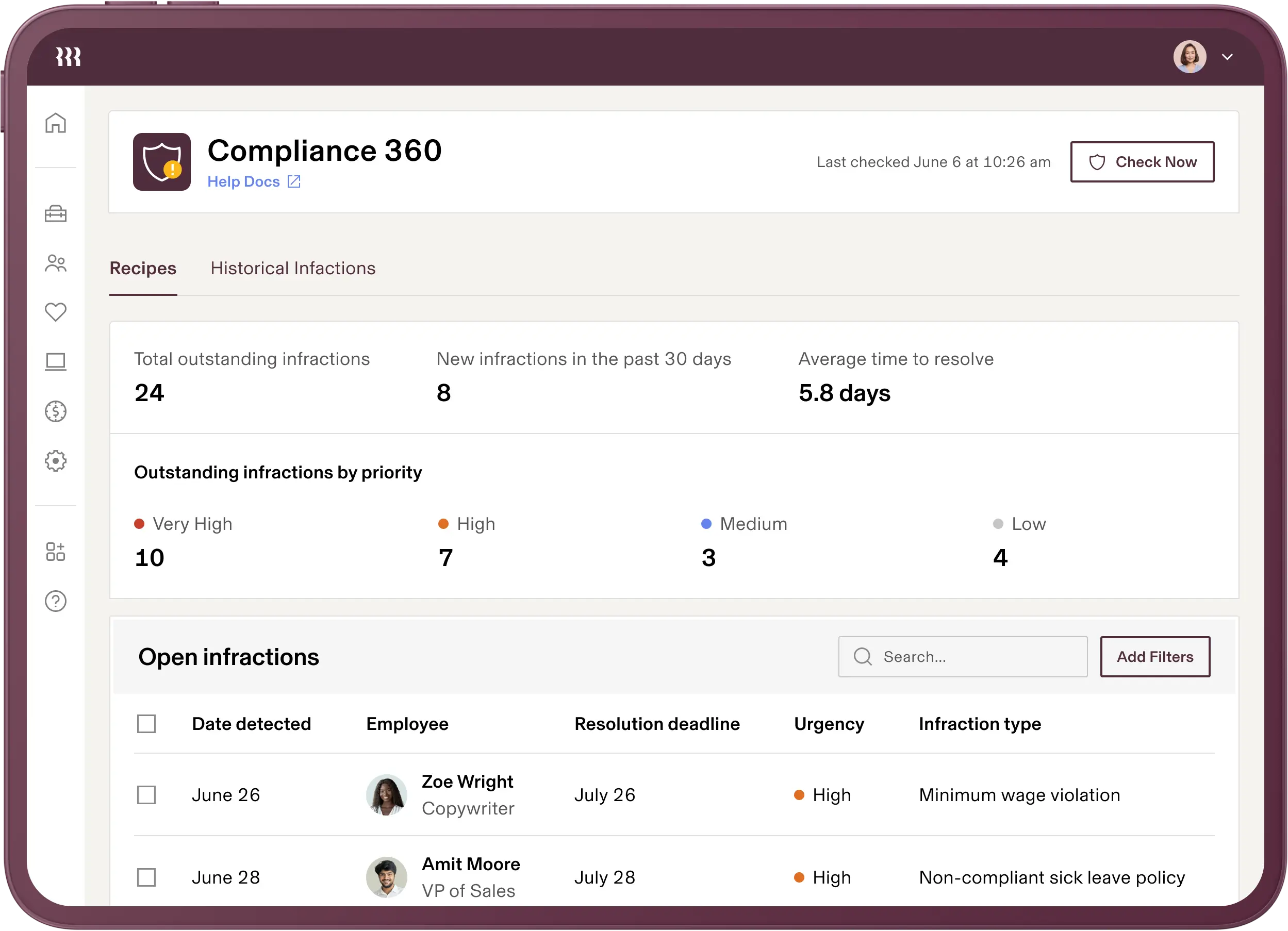
Rippling is a unified workforce platform that combines HR, payroll, and IT management into one system. It allows organizations to automate key lifecycle events such as onboarding and offboarding while keeping employee data synchronized.
By consolidating multiple operational areas, it reduces the number of tools HR teams need to manage. Companies seeking operational efficiency often explore platforms like Rippling.
How Rippling helps HR managers:
- Automates onboarding and offboarding workflows
- Syncs employee data across systems
- Combines HR and payroll management
- Reduces tool sprawl through consolidation
- Improves compliance with structured processes
- Enhances operational visibility
8. Workstatus

Workstatus is a workforce management platform that provides insight into employee productivity, attendance, and time usage. It helps organizations understand how work is distributed so managers can plan resources more effectively.
The platform supports both in-office and remote environments. HR teams often use these insights to improve accountability and operational planning.
How Workstatus helps HR managers:
- Tracks attendance and working hours
- Provides visibility into productivity trends
- Supports workforce planning decisions
- Helps allocate resources more effectively
- Improves transparency across teams
- Enables better operational oversight
Want to save hours by automating repetitive typing & workflows?
Join over 700,000+ others who are automating workflows with Text Blaze.
9. Eightfold AI
Eightfold AI is a talent intelligence platform that uses data analysis to support recruiting and workforce planning. It helps organizations identify qualified candidates, understand skill gaps, and prepare for future hiring needs.
The platform emphasizes strategic talent management rather than reactive recruiting. This makes it particularly useful for companies focused on long-term workforce development.
How Eightfold AI helps HR managers:
- Identifies candidates based on skills and potential
- Supports strategic workforce planning
- Highlights organizational skill gaps
- Improves talent matching
- Enables more informed hiring decisions
- Helps future-proof recruiting strategies
10. PeopleForce
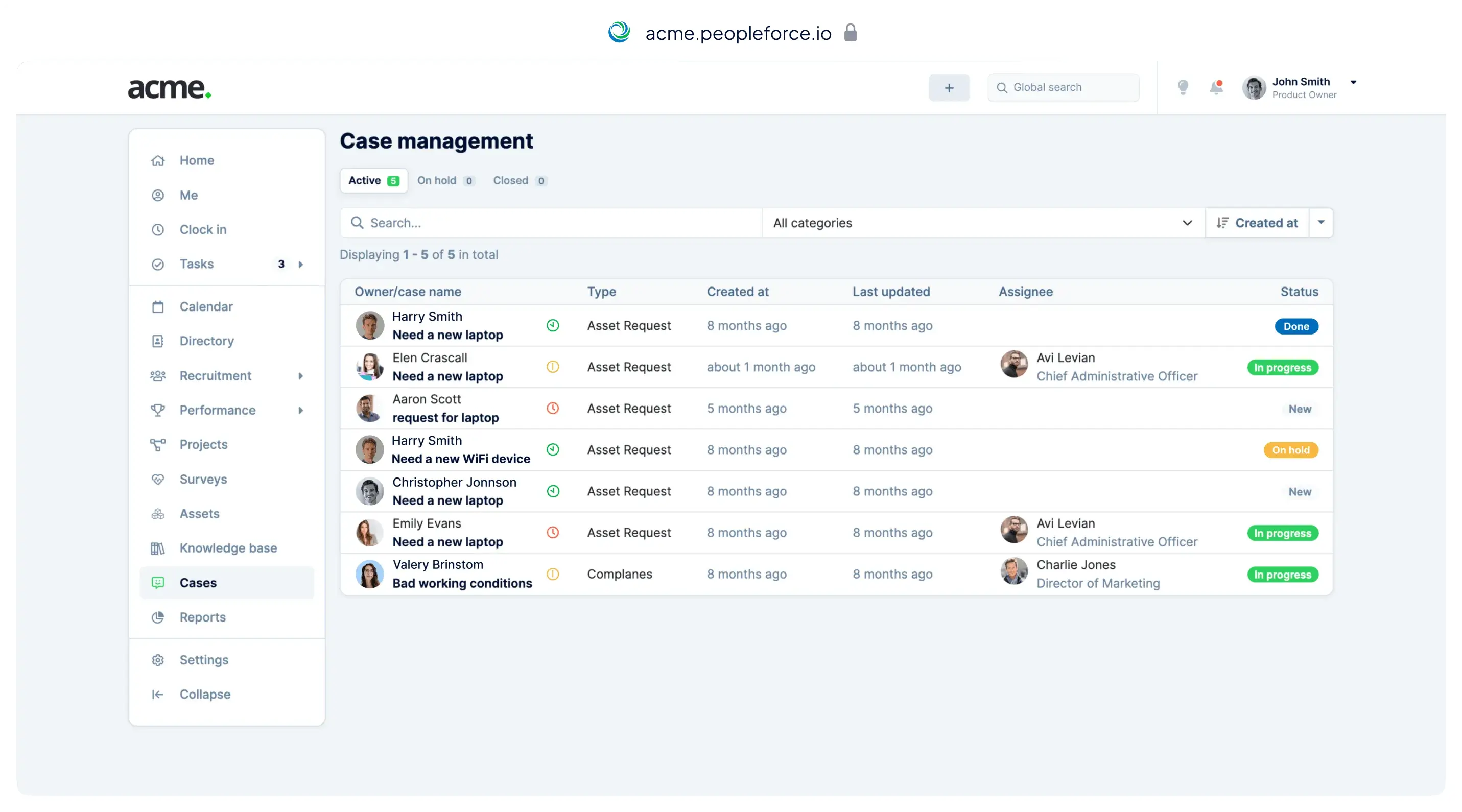
PeopleForce is an all-in-one HR platform designed to support employee management, performance tracking, and internal processes. It centralizes key HR workflows so teams can operate from a single environment.
By bringing multiple functions together, it reduces administrative complexity. Growing companies often adopt platforms like this to build structure without overwhelming their teams.
How PeopleForce helps HR managers:
- Centralizes employee records and workflows
- Supports performance tracking and feedback
- Simplifies internal HR processes
- Reduces administrative workload
- Improves organizational visibility
- Helps standardize people operations
How to Choose the Right HR Tech Stack for Your Company
Selecting the right stack starts with understanding how your team operates today and what may slow it down tomorrow.
Ask yourself these questions while evaluating your team's HR tech stack:
How complex are your current workflows?
If processes require multiple handoffs or manual updates, your stack should prioritize tools that simplify coordination. Complexity is often the clearest signal that change is needed.
Where is your team losing time?
Look closely at repetitive tasks such as data entry, approvals, or follow-ups. Software that removes these friction points usually delivers the fastest operational improvements.
What systems need to integrate?
Disconnected tools create reporting challenges and increase administrative work. Choosing software that shares data reliably helps your stack function as a single system rather than separate parts.
Can your stack support future growth?
A tool that works today may struggle as headcount rises. Favor flexible platforms that can scale without forcing a major rebuild later.
Does the software fit your team?
The best tools are the ones your team will actually use. Straightforward implementation and clear workflows often matter more than long feature lists.
A strong stack should quietly support your work instead of demanding constant attention.
Common HR Tech Stack Mistakes to Avoid
Even well-intentioned stacks can create friction if they are not planned carefully. Here are a few mistakes to avoid while building our your tech stack:
Adding tools too quickly often creates more confusion than value.
Disconnected systems usually lead to duplicate work.
Choosing software based on popularity can result in poor workflow alignment.
Skipping onboarding makes adoption harder than it needs to be.
Keeping manual processes limits the impact of your tools.
Failing to reassess your stack can cause it to fall behind your organization’s needs.
Avoiding these pitfalls makes it easier to build a system that stays useful over time.
What is the Best HR Tech Stack?
There is no universal formula for the best HR tech stack. What works for one organization may not fit another, especially as priorities and workflows differ.
Strong stacks share a common outcome: they reduce administrative work, improve consistency, and help HR teams operate with more clarity. Instead of reacting to disconnected processes, you gain a structure that supports both your team and your employees.
When your systems are aligned, HR can spend less time managing tools and more time focusing on the people those tools are meant to support.
To recap, our suggestion for the best free HR tool and software is Text Blaze. Text Blaze helps HR teams automate repetitive typing, data transfer, form-filling, and workflows on any website. Plus, Text Blaze is free forever!
Give Text Blaze a try today!