10 Best Healthcare Workflow Automation Tools in 2026
Discover the best healthcare workflow automation tools to help you streamline documentation, automate RCM, transcribe visits, and more in 2026.

If you're like most healthcare professionals, you probably spend more time clicking, typing, and switching systems than you want to admit.
Documentation, follow-ups, compliance tasks, and patient communication can easily pile up and slow down your day. Healthcare workflow automation helps by taking repetitive, manual work out of your hands so you can focus more on patients and less on admin.
In this article, we'll cover 10 healthcare workflow automation tools that can help streamline everyday work in 2026.
Is Automation Useful in Healthcare?
Automation is useful in healthcare because so much daily work follows the same patterns across patients, visits, and teams. When used thoughtfully, healthcare workflow automation supports clinicians and staff without interfering with clinical decisions.
Here are a few key benefits of automating workflows in healthcare:
Less repetitive documentation - Workflow automation tools help reduce time spent rewriting notes, filling forms, and entering the same information across systems.
More consistent processes - Automation in healthcare helps standardize tasks like intake, follow-ups, and internal handoffs so fewer steps are missed.
Reduced administrative load - By automating routine admin work, teams can spend more time on patient care and less time clicking through systems.
Fewer manual errors - Automated workflows reduce copy-and-paste mistakes and data entry errors that often happen during busy shifts.
Better use of existing systems - Many workflow automation tools work alongside EHRs and other software, improving workflows without replacing core systems.
Overall, automation works best when it handles predictable tasks in the background. This allows healthcare professionals to stay focused on patients while keeping workflows moving smoothly.
How to Automate Workflow in Healthcare
Healthcare workflow automation usually starts by identifying specific tasks that consistently slow teams down.
Here are a few different ways that healthcare professionals are using tools to automate workflows:
Automating clinical documentation and note structure to reduce time spent charting after visits.
Handling repetitive typing with templates for notes, forms, and patient messages across systems.
Streamlining patient intake, reminders, and follow-up communication with less manual work.
Moving data between systems automatically to reduce copy-and-paste errors.
Supporting administrative and back-office workflows like billing and operational tasks.
Tracking compliance and security-related processes with automated checks and records.
By focusing on one use case at a time, healthcare teams can introduce automation gradually and safely. This makes it easier to improve workflows without disrupting patient care.
Want to automate workflows in any EMR?
Join over 800,000+ others who are using Text Blaze templates.
How to Choose a Healthcare Workflow Automation Tool
Choosing the right healthcare workflow automation tool comes down to how well it fits into real clinical and operational workflows.
Here are some factors that are important to consider when choosing a healthcare workflow automation tool:
EMR integration - The tool should work smoothly alongside your EMR or within the systems your team already uses, without requiring constant switching or manual workarounds.
Compliance support - Automation in healthcare must align with privacy, security, and documentation requirements so workflows stay compliant as they scale.
Onboarding and setup - A good tool is easy to set up and doesn’t require long training periods or onboarding steps to get started.
Scalability - The tool should continue to work well as patient volume, documentation needs, or team size increases.
Time savings - Look for clear ways the tool reduces repetitive tasks and shortens daily workflows rather than shifting work elsewhere.
Team collaboration - Workflow automation tools should support shared templates, consistent processes, and collaboration across roles.
When these areas are covered, automation is more likely to feel helpful instead of burdensome. The best tools blend into daily work and quietly remove friction over time.
10 Best Healthcare Workflow Automation Tools in 2026
If you (and your team) are tired of inefficient workflows, don't worry, the tools below can help help you set up effective processes and save time.
Here's our list of the 10 best healthcare workflow automation tools in 2026:
1. Text Blaze
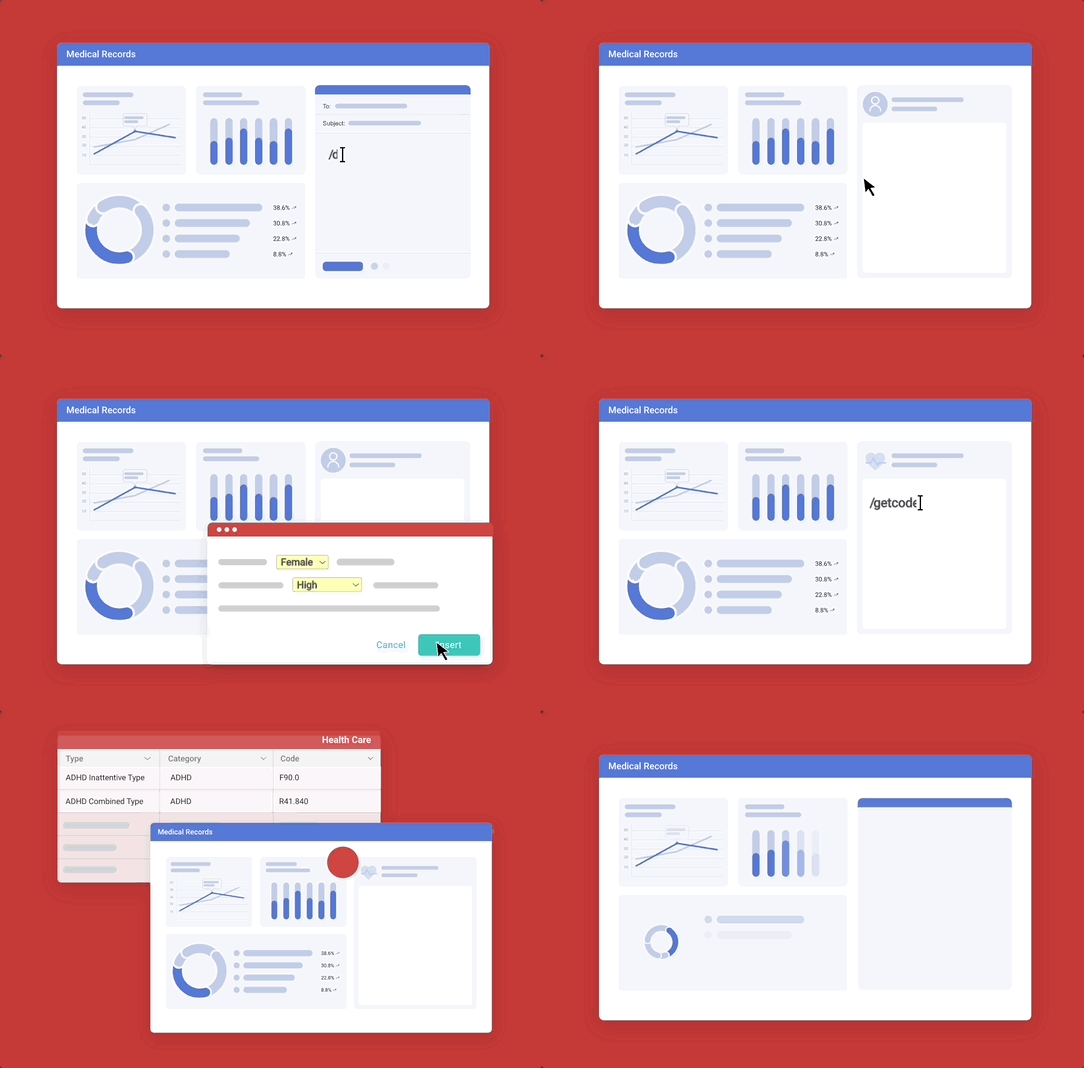
First up on our list of the best healthcare workflow automation tools is Text Blaze. Text Blaze is a low code tool that allows you to create powerful medical templates for note-taking, assessments, and communications and quickly insert them using keyboard shortcuts to save time.
Text Blaze makes it easy to create customizable, dynamic templates by incorporating data from anywhere, adding placeholders for patient information, using dynamic logic to create conditions, and using formulas to perform calculations on-the-go.
Here's how Text Blaze stands out:
Automate repetitive typing & note-taking with keyboard shortcuts & dynamic text templates that work anywhere (we mean it).
Create dynamic templates with placeholders, drop-down menus, if/else rules, autopilot, and much more!
Automate workflows by streamlining data transfer, form-filling, and repetitive typing anywhere you work.
Use AI to proofread, rewrite, and summarize - AI Blaze helps you proofread notes, rewrite rough notes to turn them into structured notes, and summarize info on any website.
Text Blaze is free forever! Say goodbye to frustrating licenses or 7-day trials.
Text Blaze works anywhere you do via the Text Blaze Chrome Extension, Windows app, and Mac app!
Text Blaze is perfect for teams! Learn more about using Text Blaze for teams to supercharge your team's communication and productivity!
Want to automate workflows in any EMR?
Join over 800,000+ others who are using Text Blaze templates.
2. Sully AI

Sully AI supports healthcare workflows by helping structure and generate clinical documentation. It is used to assist with organizing patient information into consistent note formats.
Clinicians rely on it to reduce time spent turning raw information into structured records. The tool supports documentation workflows without making clinical decisions on its own. It fits well into environments where note consistency matters.
3. PatientNow

PatientNow focuses on automating patient-facing and administrative workflows. Practices use it to manage scheduling, intake, and follow-up communication more efficiently.
Automation helps reduce manual outreach and repetitive front-desk tasks. It supports smoother patient experiences while lowering administrative workload. This makes it useful in outpatient and specialty care settings.
4. Vanta

Vanta is used to automate compliance and security-related workflows in healthcare organizations. Teams rely on it to monitor controls, track requirements, and maintain documentation over time.
Instead of handling compliance manually, workflows are continuously checked and recorded. This reduces the operational burden on internal teams. It is well suited for organizations managing sensitive healthcare data.
5. Keragon

Keragon helps automate workflows by connecting healthcare systems together. Teams use it to move data between tools without manual entry.
This is helpful for syncing patient data, auto-filling forms, or operational records across platforms. Automation reduces errors caused by repetitive copy-and-paste work. It works well for organizations using multiple disconnected systems.
6. Freed AI

Freed AI focuses on automating parts of clinical documentation. Clinicians use it to help generate visit notes and summaries with less manual effort.
The tool supports reducing after-hours charting by organizing documentation during or after visits. Final review and control stay with the clinician. It is commonly used in outpatient care workflows.
7. UiPath

UiPath is a general workflow automation tool applied to healthcare operations. Organizations use it to automate rule-based tasks across digital systems.
Common use cases include billing workflows, claims processing, and administrative tasks. Automation helps reduce time spent navigating multiple systems. It is often adopted by larger healthcare organizations with complex processes.
8. Automation Anywhere
Automation Anywhere supports healthcare workflow automation through rule-based process automation. Teams use it to handle repetitive back-office tasks like data entry and reporting.
Workflows can be automated without deep technical customization. This helps operational teams manage higher volumes of work more consistently. It is frequently used in revenue cycle and administrative departments.
Want to automate workflows in any EMR?
Join over 800,000+ others who are using Text Blaze templates.
9. Thoughtful AI

Thoughtful AI focuses on automating healthcare administrative and operational workflows. It is used to support processes like revenue cycle management and internal operations.
Automation helps reduce delays and manual follow-ups. Teams rely on it to make workflows more predictable and manageable. It fits well in organizations looking to streamline non-clinical work.
10. Heidi Health AI

Heidi Health AI supports healthcare workflows by assisting with clinical documentation organization. Clinicians use it to structure information collected during patient visits.
This helps reduce time spent organizing notes after appointments. The tool supports documentation consistency across encounters. It works as a supporting layer rather than replacing clinician oversight.
What is the Best Healthcare Workflow Automation Tool?
The best healthcare workflow automation tool depends on your specific workflows and what slows you down during the day. Some roles struggle most with repetitive documentation, while others feel the drag from scheduling, compliance tasks, or administrative handoffs.
The right tool is one that fits into your existing systems, saves time on predictable work, and does not add extra steps or friction. It should help you regain time without forcing you to rethink how you deliver care.
If you are honest with yourself, you probably spend more time on repetitive tasks than you want to admit. Improving even one small part of your workflow can make your day feel more manageable.
Start with a clear problem and build from there to make automation feel empowering instead of overwhelming.
To recap, our suggestion for the best healthcare workflow automation tool is Text Blaze. Text Blaze helps healthcare professionals automate repetitive note-taking and workflows anywhere (and we mean anywhere).
Give Text Blaze a try for free today!