Medication Reconciliation in Home Health: Definition, Timing & Example
What medication reconciliation means, when it is done in home health under OASIS-E2, why it matters at care transitions, and a documentation example.

Medication reconciliation is one of the most important checks at any care transition, and in home health it happens at the kitchen table, with the discharge list in one hand and the patient's bottles in front of you. Below is what medication reconciliation means, when it is done, why it matters, and an example of how to document it without retyping the same structure every time.
What is medication reconciliation?
Medication reconciliation is the process of comparing the medications a patient is actually taking with the medications that are ordered or expected after a transition in care, identifying differences, and resolving those differences with the prescriber or other responsible practitioner. A simple example is finding that a hospital discharge list does not match the bottles in the home and clarifying the difference before the list is treated as current. AHRQ's medication reconciliation definition describes it as a way to prevent unintended medication inconsistencies when patients move between care settings.
What does medication reconciliation mean?
For anyone hearing the term for the first time, the medication reconciliation meaning is simple: make sure the medication list matches what the patient really takes and correct the list when it does not. Depending on the setting, nurses, pharmacists, physicians, and other qualified clinicians may perform or participate in the process, and each organization defines its own workflow.
The process is especially important at transitions such as admission, transfer, discharge, and the start or resumption of home health care. It also matters whenever the medication regimen changes. The goal is not simply to produce a cleaner list. It is to catch omissions, duplications, dose or frequency differences, interactions, and other discrepancies before they contribute to patient harm.
When is medication reconciliation done?
Medication reconciliation is commonly performed when a patient moves from one care setting to another or when the medication regimen changes. In hospital workflows, that includes admission, transfer, and discharge. In home health, the timing is tied to the home health assessment process and to changes that occur during the episode.
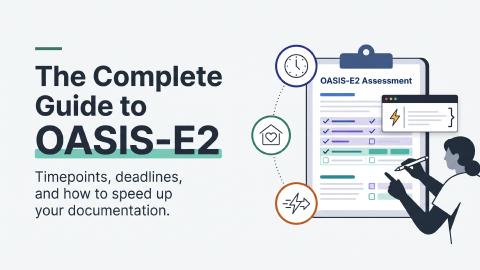
For Medicare-certified home health agencies, the current OASIS-E2 guidance says the drug regimen review for M2001 should be completed as close to the actual start of care (SOC) or resumption of care (ROC) as possible. That review includes medication reconciliation, review of all medications the patient is currently using, and review of the regimen for potential clinically significant medication issues.
The broader federal home health requirement is in 42 CFR 484.55. The comprehensive assessment must include a review of all medications the patient is currently using. The assessment is also updated at least every 60 days, including recertification, after certain hospital returns, and at discharge. At recertification, the broader comprehensive assessment is updated, but M2001 itself remains an SOC/ROC item.
A new or changed medication is another practical trigger to update the medication list and check for discrepancies according to the agency's process. If an order changes during the episode, the current list, the medications actually present in the home, and the patient's or caregiver's understanding should no longer be assumed to match automatically.
What happens after a medication issue is found?
OASIS-E2 separates identifying a clinically significant issue from following up on it. M2003 asks whether the agency contacted the physician or allowed practitioner and, to the extent possible, completed the prescribed or recommended actions by midnight of the next calendar day. At transfer, death at home, or discharge, M2005 looks back at clinically significant medication issues identified since the most recent SOC/ROC and whether the required communication and follow-up occurred. The CMS manual provides the item-specific instructions.
Why is medication reconciliation important?
Transitions are a common point for medication discrepancies because multiple lists, prescribers, pharmacies, and care settings may be involved. AHRQ describes the kinds of unintended differences that can appear during transitions, including omitted medications, unnecessary duplication, and incorrect dosages.
For home health clinicians, the safety question is practical. Does the list from the hospital match what is actually in the home? Is the patient taking something that is not on the list? Is an old bottle still being used after the order changed? Are both a brand-name and generic version present? Are over-the-counter products or supplements missing from the record?
The federal requirement is broader than comparing two lists. Under 42 CFR 484.55(c)(5), the comprehensive assessment must review all medications the patient is currently using to identify potential adverse effects and drug reactions, ineffective therapy, significant side effects, significant interactions, duplicate therapy, and noncompliance with drug therapy.
Medication reconciliation is also a formal patient-safety expectation for accredited organizations. The Joint Commission describes medication reconciliation and medication-list review as part of the organization's medication-safety process.
That is why the medication reconciliation process should be treated as clinical verification, not clerical cleanup. The clinician compares the information, identifies the discrepancy, communicates when necessary, and documents what happened. The prescriber or responsible practitioner makes treatment decisions.
Want to stop retyping the same med rec entries?
Join 800,000+ who are using Text Blaze templates.
Medication reconciliation in home health
Home health makes med rec unusually concrete because the clinician can see what is actually in the patient's home. The hospital discharge list may say one thing, the pharmacy label another, and the bottles in the cabinet may include medications from before the hospitalization. A caregiver may also be filling a pill organizer from a separate handwritten list.
A practical home-health review starts by gathering the available sources and comparing them line by line. That can include the discharge medication list, medication bottles and packages in the home, the patient's or caregiver's report, the current agency record, and pharmacy information when it is available. Prescription drugs are only part of the picture. OASIS-E2 says the drug regimen review includes prescribed and over-the-counter medications, nutritional supplements, vitamins, homeopathic and herbal products, and medications given by any route.
The clinician is looking for differences that matter. A medication may appear on one list but not another. A bottle may show a different dose or frequency than the current order. The same drug may be present under both a brand and generic name. A discontinued medication may still be in the cabinet. A newly ordered medication may never have been picked up. The patient may also report a symptom or problem that raises a medication concern.
For OASIS-E2, M2001 asks whether the complete drug regimen review identified a potential or actual clinically significant medication issue. CMS defines that kind of issue as one that, in the clinician's professional judgment, warrants communication with the physician or allowed practitioner and completion of prescribed or recommended actions by midnight of the next calendar day, at the latest. The OASIS-E2 manual gives examples and coding instructions.
The important distinction is that the nurse or other qualified clinician identifies and communicates the discrepancy. Medication reconciliation nursing documentation should show the sources compared, the discrepancy or lack of one, who was contacted when follow-up was needed, what clarification or order was received, and what the patient or caregiver was taught. It should not imply that the documentation tool made the clinical decision.
Documenting medication reconciliation without retyping the same structure
A complete reconciliation entry tends to use the same framework even though the clinical details change. The note usually identifies the sources compared, whether discrepancies were found, what follow-up occurred, and what education was provided.
Medication reconciliation example
Medication reconciliation
Medication reconciliation completed at {formmenu: default=start of care; resumption of care; medication change} using {formtext: default=the hospital discharge list, medication containers in the home, the pharmacy fill history, and patient and caregiver report;cols=40}. Discrepancy found: {formtext: default=the discharge list includes furosemide, and a bottle of Lasix filled before the hospital stay is also in the kitchen cabinet. Caregiver reports filling the pill organizer from both bottles. Possible duplicate therapy;cols=40}. {formtext: default=Primary care physician's office;cols=25} notified by phone at {formtext: default=11:10 a.m.;cols=9}, discrepancy reported to the office RN. Clarification received from the physician at {formtext: default=1:25 p.m.;cols=9}: {formtext: default=continue furosemide as listed on the discharge list and stop using the Lasix bottle;cols=40}. Agency medication list updated to the confirmed order. Lasix bottle set aside with the patient's permission for disposal per agency process. Patient and caregiver taught that {formtext: default=Lasix and furosemide are the same medication and to fill the organizer from the current list only;cols=40}. Caregiver refilled the organizer correctly using teach-back.
_
The structure can repeat. The sources, discrepancy, contact, clarification, and teaching must come from that patient's actual reconciliation.
That framework gets written after every admission, every resumption of care, and every medication change. Admissions are already the hardest visits to finish in the home, and much of that typing ends up done in the evening. Rebuilding the same sentences from scratch each time is where those minutes go.
Text Blaze keeps that repeated wording one shortcut away, and it has a free plan. You type a short shortcut in the field you already chart in, a small form asks for the details that change (the sources you compared, whether you found a discrepancy, who you notified), and the finished entry appears in your own words. The framework takes seconds, and your time goes to what you found today.
The Nursing Narrative Note Templates include a medication update narrative, with fill-ins for what changed, who ordered it, and how the change was verified against the bottles in the home. The pack also has a change-in-condition narrative that walks through the physician call and the order read back. You can add the pack to your Text Blaze account in one click and edit every snippet to match your own wording and workflow. It provides a reusable structure, not the clinical reconciliation itself.
For the start-of-care visit, the Skilled Nursing Visit Note Templates include a new admission visit note. The OASIS-E Cheat Sheet & Phrase Pack includes a phrase bank keyed to OASIS item numbers, with a medications line for the drug regimen review. Both packs can also be added in one click and customized. If one sentence repeats at every visit, such as your no-discrepancies line, save it once as your own snippet.
This is not an AI note-writing tool. Text Blaze inserts wording the clinician has saved and leaves the patient-specific findings to the clinician. Copying a prior note forward can create cloned documentation. Reusable wording should hold only what truly repeats, while the findings, discrepancies, communication, and teaching for today's visit must be entered from today's care.
Snippets hold reusable wording, not patient records. On an agency computer, check the agency's policy before installing a browser extension or desktop tool. Text Blaze works on computers through Chrome and Edge and through Windows and Mac apps. It can insert saved wording in browser-based EHRs, fax portals, email, and other approved computer workflows, but not inside phone or tablet charting apps.