


What is a biopsychosocial assessment?
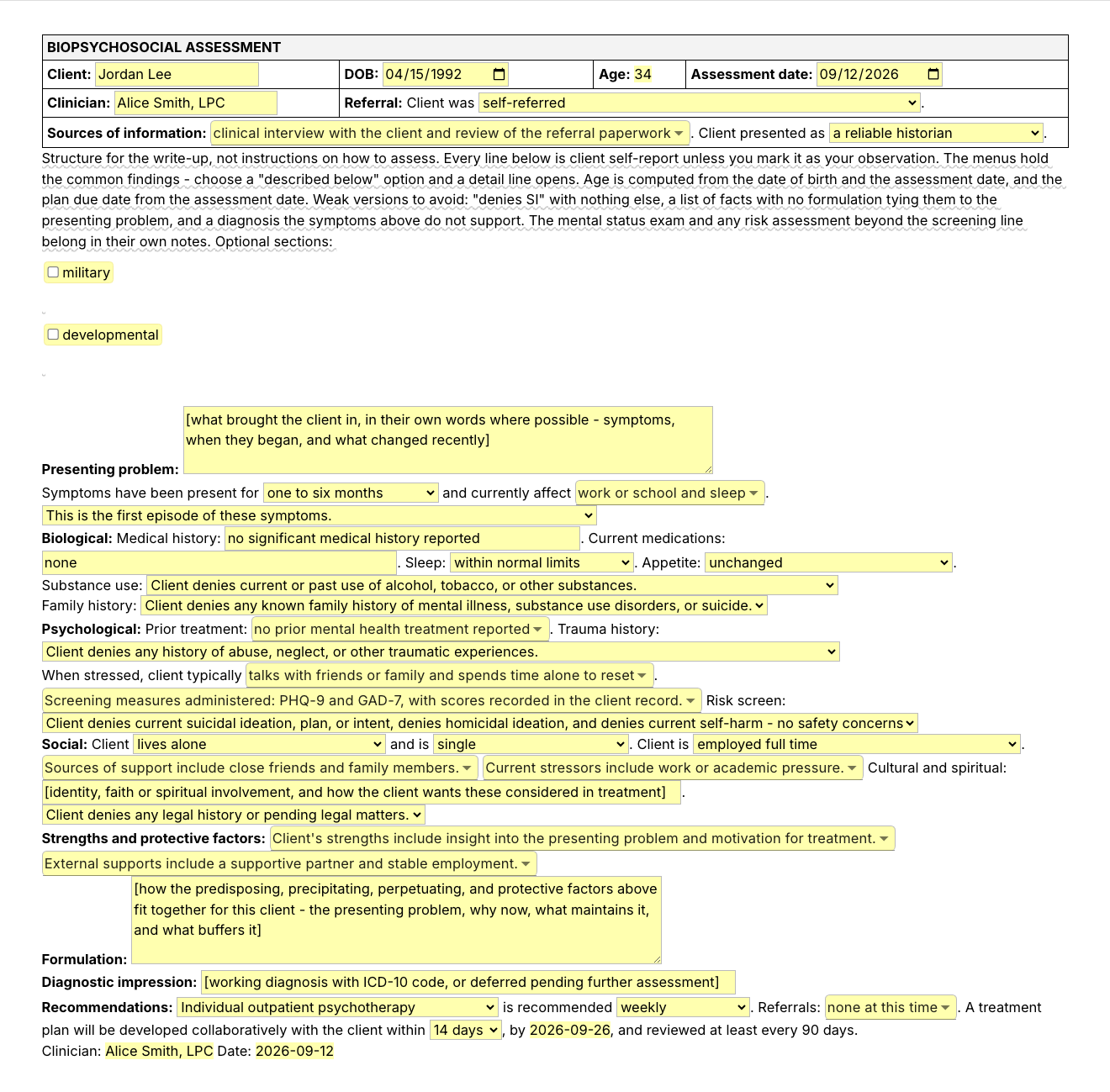
A biopsychosocial assessment is the write-up a clinician completes at intake to describe a client across three domains: biological (health, medications, sleep, substance use, family history), psychological (symptoms, prior treatment, trauma, coping, risk) and social (home, relationships, work, supports, culture). It ends with a formulation, a diagnostic impression and recommendations for treatment.
Whatever the setting, a reader expects the same parts in roughly the same order:
- Identifying information and sources: who the client is, who referred them, where the information came from and how reliable a historian the client was.
- Presenting problem: what brought the client in, in their own words where possible, how long it has been going on and what it is affecting.
- Biological: medical history, current medications, sleep, appetite, substance use and family history.
- Psychological: prior treatment, trauma history, coping, any screening measures and a risk screen.
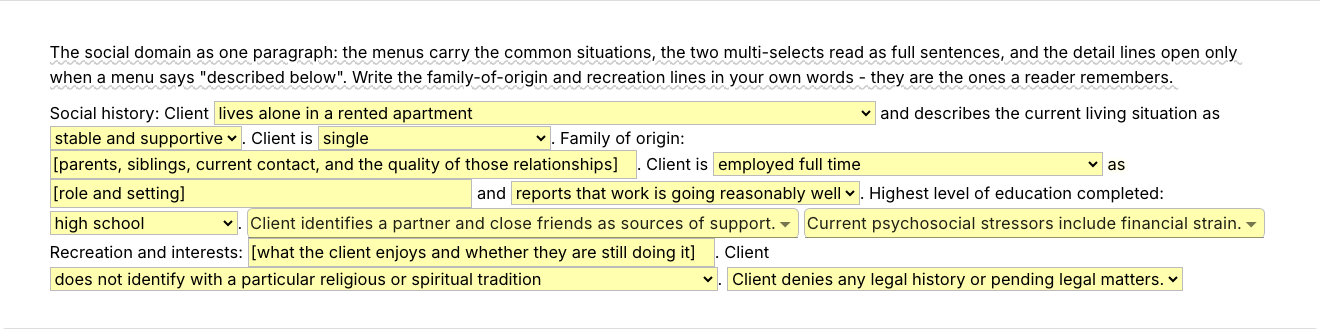
- Social: living situation, relationships, work or school, supports, stressors, culture and faith, legal history.
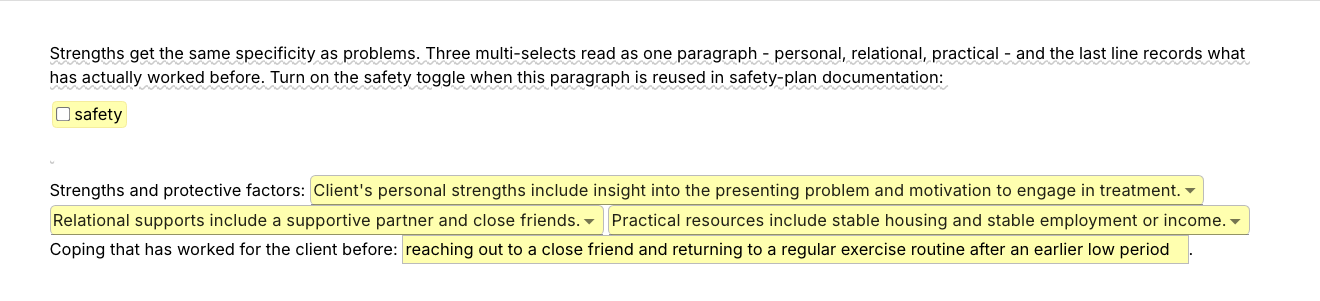
- Strengths and protective factors: documented with the same care as the problems.
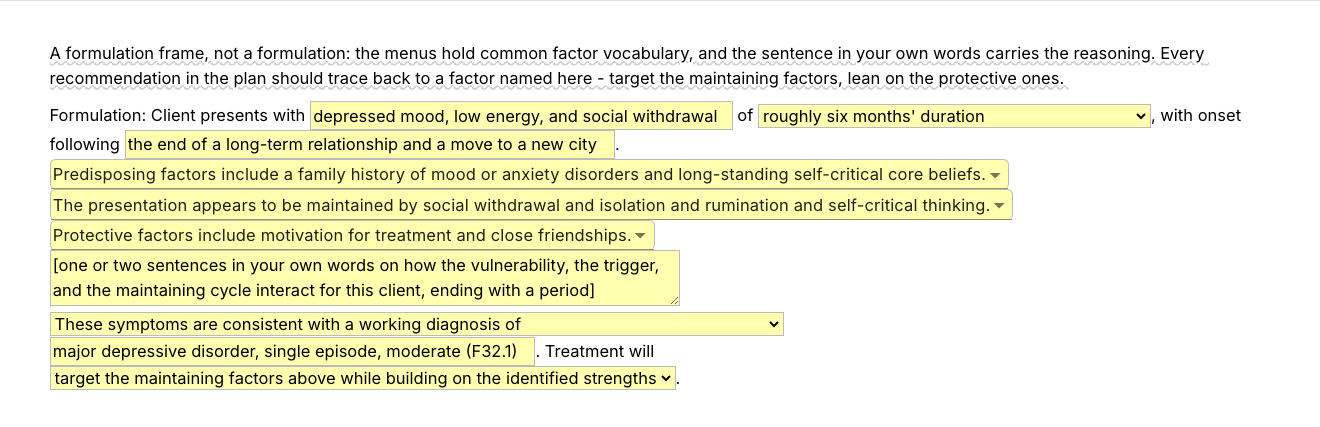
- Formulation, diagnostic impression and recommendations: how the history explains the presenting problem, a working diagnosis, and what happens next.
What is a biopsychosocial assessment in social work?
In social work it is the standard intake document, in agencies, hospitals, schools and private practice alike, and it is written from the person-in-environment view: housing, income, family, community, culture and access to resources get as much room as symptoms do, and strengths are findings to record. Many social work programs and agencies use a biopsychosocial spiritual assessment, which adds faith, meaning and cultural identity as a domain of its own. Counselors, marriage and family therapists and psychologists write the same document, often under the name intake assessment or BPS.
Where that material goes in this pack:
- Housing: /bps and /social record the living situation, including a client without stable housing, and /social adds a menu for how stable the housing is.
- Finances and other stressors: financial strain, housing instability, caregiving, legal matters and discrimination are in the stressors menu, and /social adds a menu for whether finances are a current strain.
- Practical resources: /strengths lists income, health insurance, transportation, childcare and a primary care provider.
- Referrals: the /bps referrals menu includes community resources for housing or financial support.
- What is missing: there is no line for income source, benefits or food security. To add one, open /bps in your Text Blaze dashboard, type "Resources and benefits:" into the Social paragraph and put a text field after it.