




How to write a treatment plan for counseling
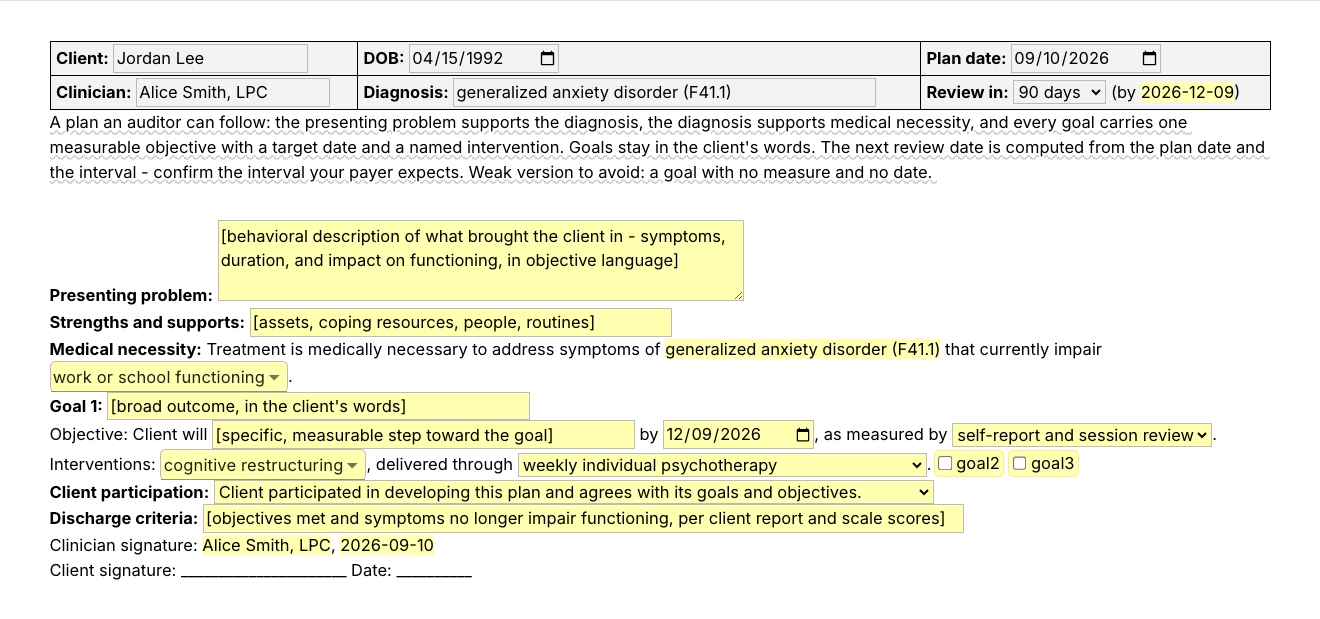
Write a counseling treatment plan in the order a reviewer reads it: the presenting problem that supports the diagnosis, the diagnosis that supports medical necessity, then each goal in the client's words with a measurable objective, a target date and a named intervention. Close with client participation, discharge criteria, signatures and a review date.
A treatment plan is the document that says why this client is in treatment, where the two of you are trying to get to, and how you will both know it is working. When a payer asks for records, the plan is usually on the list next to the intake, the diagnosis and the progress notes, so it helps when all of them tell the same story. What a counseling treatment plan usually has:
- Identifying details: client, date of birth, plan date, clinician and credential.
- Presenting problem: what brought the client in, described behaviorally: the symptoms, how long they have lasted and what they get in the way of.
- Diagnosis and medical necessity: the diagnosis you have made, and a sentence that ties treatment to the functioning it impairs.
- Strengths and supports: the people, routines and resources the plan can lean on.
- Goals: broad outcomes, in the client's words.
- Objectives: the measurable steps under each goal: what the client will do, by when, how it is measured and from what baseline.
- Interventions: the modality and techniques you will use, and how often you meet.
- Client participation, discharge criteria and signatures.
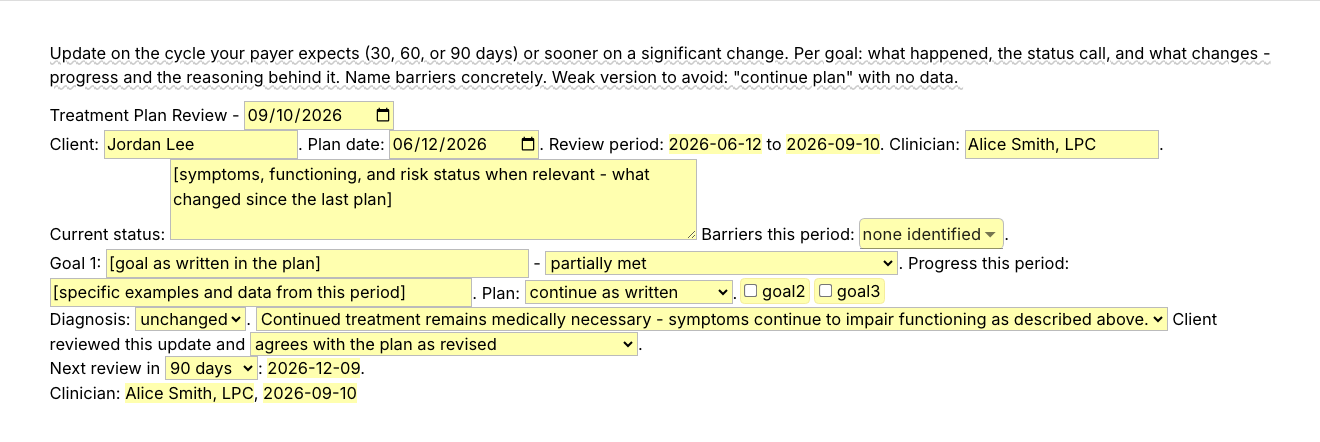
- Review date: when the plan is next updated. Ninety days is a common cycle. Confirm the one your payer or agency expects.
Three habits make the plan easier to write and easier to read later. Start from the intake: the presenting problem and the diagnosis are already documented there. Write the goal with the client in the room, in their words, and put the clinical precision into the objective. When the review date comes, update the plan with data: what changed, where each goal stands and what you are revising.